
How Clare Pooley Sits Down & Writes
Equal parts funny and heartbreaking, The Authenticity Project is the kind of book you never want to put down.

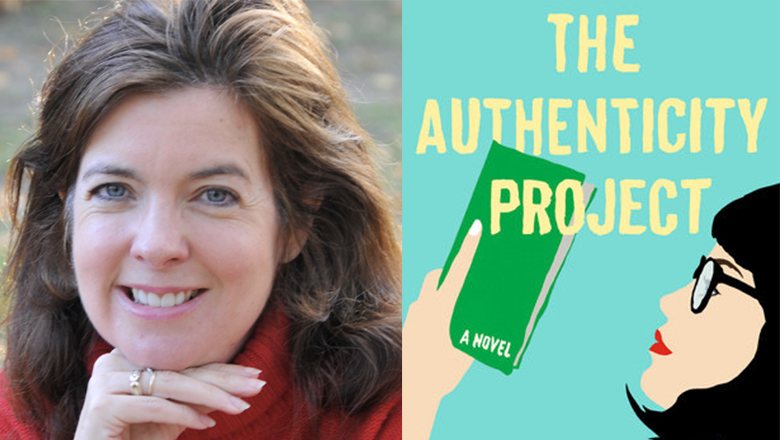
What would you do if you happened to find a notebook filled with a stranger’s most intimate thoughts—and then that stranger challenged you to fill out the next empty pages with your own deepest, darkest feelings before passing it along to somebody else?
That’s the predicament Monica finds herself in when an eccentric, lonely septuagenarian artist named Julian Jessop leaves a little green notebook in her cafe. The first few pages detail the honest truth about Julian’s life: he’s been incredibly lonely and isolated since his wife passed away. At the end of his entry, Julian asks Monica to share her truth in the notebook, as well, and then leave the notebook for somebody else to find.
When Monica leaves the notebook in a local wine bar, she sets something in motion she never could have predicted. The notebook gets passed between The Authenticity Project’s colorful, enchanting cast of characters—including Hazard, an addict who vows to get sober, and Alice, a mommy-blogger with a seemingly perfect life.
In a time dominated by social media and cultivating the best versions of ourselves online, The Authenticity Project, like Julian’s notebook, challenges readers to put their real selves front and center…warts and all.
If you love books by Sophie Kinsella, Jill Santopolo and Josie Silver, you’ll absolutely adore The Authenticity Project. Oh, and your book club will, too—kick off the discussion by asking everyone what they would do if they found Julian Jessop’s little green notebook.
We got the chance to pick Clare’s brain about her writing process (coffee and cake are involved), story inspiration and all things The Authenticity Project.
Q: Where/When do you like to write the most?
I usually write at my kitchen table, because I've always felt more comfortable in a kitchen than in any other room in a house. Kitchens are where life happens.
I get up before dawn - usually around 5am, and write while the house and the city are completely quiet. It's a really magical and creative time of day.
Q: When it comes to drafting, do you prefer writing on a computer or freehand?
I honestly don't think I could have written a book if I'd had to write freehand. I like to constantly edit, to add, delete and move things around. The idea of trying to do that with pen and paper makes me feel queasy!
Q: Are you more of a plotter or pantser?
I'm somewhere in between!
Before I start, I like to have a sketchy idea of where I'm going - some key characters, and a beginning, middle and end. But I like to keep all the detail flexible so I can let my characters decide how to react to any given situation, and where to go next. Often they really surprise me, and that's where the magic appears.
There's a big twist in The Authenticity Project which I had no idea was going to happen when I started writing. I think the reason it takes readers so much by surprise is that it did me too!
Q: Stephen King has a great line in ‘On Writing’ that says “the scariest moment is always right before you start. After that, things can only get better.” That scary pre-start moment often inspires procrastination in writers. Suddenly, you have to clean your entire house, do the laundry and play Candy Crush for an hour before you can actually start writing. Is there anything you need to do before you can actually sit down and work?
As always, Stephen King nails it. I find that if I don't write one day, the next day is harder, and the longer I leave it the harder it gets to start again.
The important thing is to try to write something every day, before you do any of those chores, or anything else at all. It doesn't matter if it's any good at this stage - you can worry about that in the edit. Just get the first draft down. Wrestle it onto the page and pin it there.
Q: Do you listen to music while you write? If so, what music? Is your choice of music inspired by the project you’re working on?
ARE YOU CRAZY?
I love music, but when I write I need total silence, otherwise I can't hear my characters talk.
Q: Do you need any particular drinks—coffee, tea, etc—or snacks on hand when you’re writing? If so, which ones?
I'm a recovering addict, so my only remaining vices are caffeine and sugar. I run on coffee in the morning, tea in the afternoon, and reward myself with cake whenever I hit a big milestone - like the end of a draft, or solving a tricky plot point.
Q: Some writers believe you have to write every single day. Is that true of your process? How often do you write/how long for each session?
Yes. I started writing every day as therapy when I first quit drinking, five years ago. Initially, I wrote a blog (Mummy was a Secret Drinker), then a memoir (The Sober Diaries). Now I write fiction, but it's still my therapy. If I don't write something every day, I feel anxious. I usually write for about three hours, and edit for another two or three.
Q: Are you a fan of craft books for writing? Is there one you consult often/would recommend to aspiring authors?
Yes. I love Stephen King's book which you've already mentioned, and my other favourite is Anne Lamott's Bird by Bird, and especially her chapter on 'shitty first drafts,' which has kept me going through many a confidence slump.
Q: What’s one piece of advice you’d give an aspiring author?
Don't try and second guess what the publisher, or even the reader, wants you to write; write what you need to write. That's the story that will feel authentic, and that's where you'll find your voice.
Q: The Authenticity Project’s premise is so enticing and why I imagine so many people will pick it up (and tear through it quickly): the little green notebook, shared by six strangers. Where did the initial inspiration for The Authenticity Project come from?
The Authenticity Project was inspired by my own experience.
Five years ago, my life on the outside seemed pretty perfect. The reality was very different. I was drinking more than a bottle of wine a day and was barely keeping things together. I told the truth in my blog, and that act of honesty transformed my life, and the lives of thousands of people who read it. That made me wonder what would happen if other people confessed their truths to strangers....
Q: Where do you normally find story inspiration?
In the middle of the night! I think much more creatively and laterally when I'm half asleep. I often start with the question what would happen if...? and see where that leads me.
Q: Did you find it difficult to balance your main cast of characters while writing? Was there any character, in particular, you personally favored above the others?
The novel is written from the perspectives of six different characters, and I sometimes felt like I was going crazy as they all lived in my head and jostled to be heard. If I found myself favouring one character, I'd take it as a sign that I had to make the others more interesting.
Q: At the start of the book, you quote Leonard Cohen— “ring the bells that still can ring/forget your perfect offering/there is a crack in everything/that’s how the light gets in”— which perfectly captures how The Authenticity Project is such a funny, entertaining book, while also being deeply moving and, at times, heartbreaking. How did you manage to find that balance while writing—or as Cohen would put it: how did you manage to let the light into your story?
I realised as I wrote the book, that what I loved most about each of the characters was their flaws. That's why the quote seemed so perfect for the book, because the cracks in all of them are what makes them so unique and so human. By the end of the novel they come to realise that about themselves and each other, and that's where the light comes into the story.
Q: In theory, I think, we’d all like to believe we’d answer Julian Jessop’s call to fill in the next few pages with our own story and pass it along, as Monica ultimately does. Do you think you would have done the same if you found Julian’s Authenticity Project in real life?
In a way, I did, when I told the world about my addiction in my blog. I learned that when you allow yourself to be vulnerable, extraordinary things can happen.
Q: After you’ve finished a novel, do you ever imagine what your characters are up to after the last page?
Yes! I totally know what each of them gets up to next, and I really miss them all, although I'm in the middle of editing my next book now, so I'm falling in love with a whole new set of people too.
Q: What's the last book you read that kept you up well past bedtime?
My favourite book of the last year was Daisy Jones and the Six. Daisy and her band felt so real to me that I was devastated I couldn't buy their album!
You can grab a copy of The Authenticity Project by Clare Pooley from Bookshop.org or Amazon.com. Happy reading!
Sit Down and Write is brought to you by Emily Lee and Cassie Stossel.
Love this